Friday, October 14, 2022
Middle Ages : Europe Before Racism (featuring Olivette Otele)
I have said it before, racism only* came after colonialism and slave trade, and here is a welcome example of someone else's research on this:
The Guardian : African Europeans by Olivette Otele review – when race mattered less
Fara Dabhoiwala @fdabhoi Wed 4 Nov 2020 12.00 GMT
https://www.theguardian.com/books/2020/nov/04/african-europeans-by-olivette-otele-review-when-race-mattered-less
African Europeans: An Untold History
Relié – Grands caractères, 29 octobre 2020, Édition en Anglais de Olivette Otele (Auteur)
https://www.amazon.fr/African-Europeans-History-Olivette-Otele/dp/1787381919
* Or prevalent racism did so, some degree of "racism" is arguably inevitable and not necessarily even bad. If it doesn't affect that people who have the same rights otherwise should not have them reduced because of racial difference.

Thursday, October 13, 2022
La Suède rurale que je n'ai pas vécue
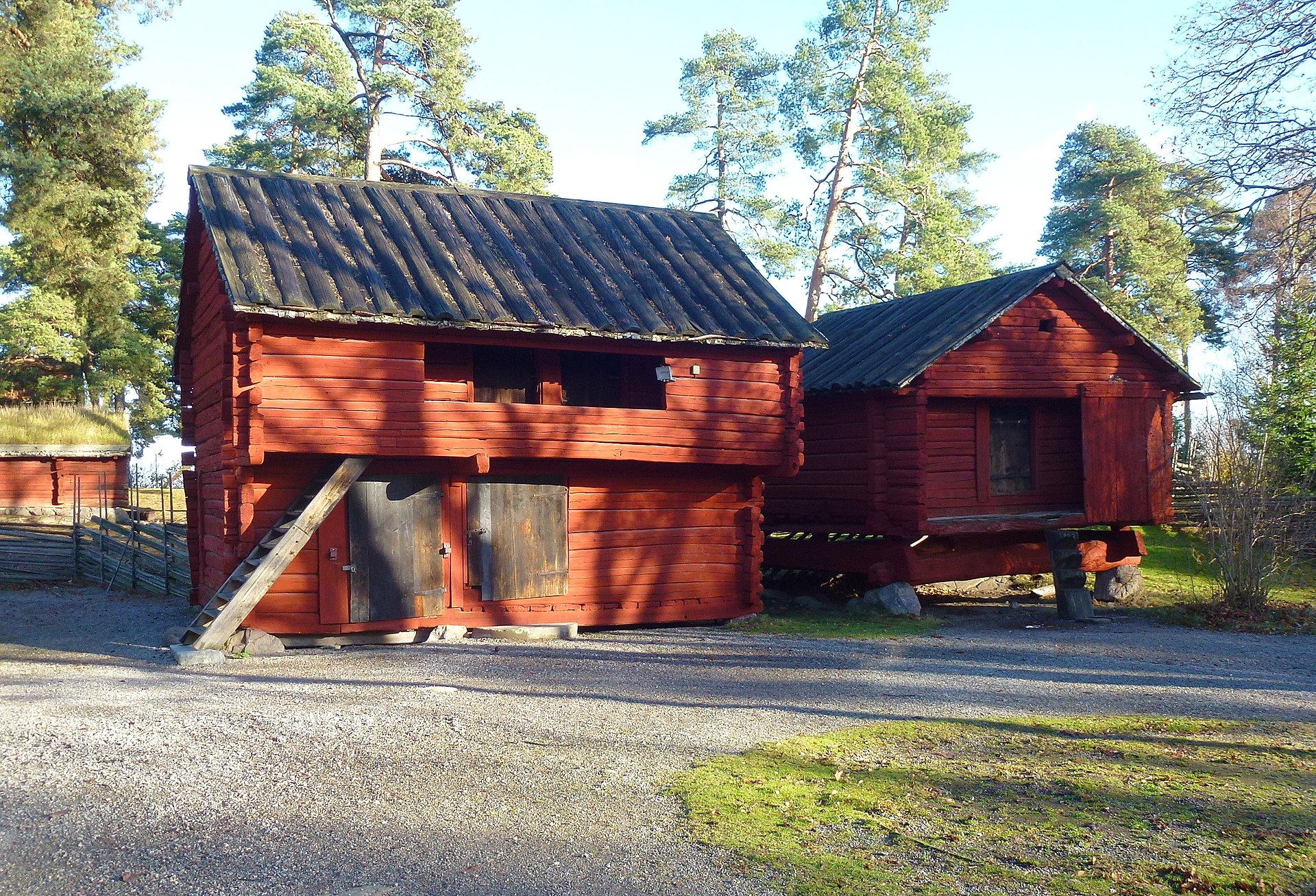
Par Holger.Ellgaard - Eget arbete*, CC BY-SA 4.0, Länk
Et pourtant, je l'ai vécue, car j'ai vue cette cabane à Torekällberget [touréchyelleberyette] et j'en raffole l'odeur de goudron ... ou si c'était une autre cabane à côté.
Torekällberget - que pour le public français je peux abréger comme TKB - est un écomusée à Södertelge [seudeurtelyé] que j'ai connue tour à tour avec Vienne, mes premiers années. Ma mère était à Vienne pour les cours à la fac et les vacances universitaires à Södertelge. Je suis né en cours de fac./HGL
* son propre travail.
Saturday, October 8, 2022
Easter Eggs Will Not Replicate a Style
Φιλολoγικά/Philologica: Easter Eggs Will Not Replicate a Style · Assorted retorts from yahoo boards and elsewhere: A Tintin Fan who cannot accept Hergé's work was admired by Degrelle
There is a video channel that offers breakdowns of the Episodes.
What Episodes? Well, those of The Rings of Power of course.
There is more than one, but the one I am right now looking at, (no, not watching) gives on the caption a count of how many "easter eggs" there are in an episode. 91 for episode 7, it seems.
Even so, quite a lot of fans are claiming "this is so not Tolkien" - and admitted, from what I have seen (not on Netflix itself), the writing is pretty different, way eerier.
Those who, like myself, enjoy both Tolkien's Middle-earth and Narnia will know that these while closer to each other than either is to Netflix, in style, they are pretty different.
Tom Bombadil could make company with Bacchus and Silenus, at a pinch, but the Ring-Bearer and his hobbit friends could not do so with the Pevensies of Prince Caspian.
There is a big difference in moral universe between being involved in a deal with the devil and trying to escape it (like the ring-bearer and like Krabat) and having a vocation to save a king from an usurper (like St. Joan).
Middle-earth is so much closer to That Hideous Strength, if you want a moral or style-wise parallel in C. S. Lewis. I am not speaking of style of prose (that's lost anyway in a film adaptation or TV series except for dialogue), but style of action.
And nevertheless, on a day back in Malmö, when I had re-read LotR (much easier in an apartment with less noise) and Narnia (I have managed even here in the streets of Paris), I could drew up a list of 40 "easter eggs" between the two, not deciding which ones were original to the author and which ones were borrowed from the other.
Ettinsmoor and Etten Moors is one of the examples, the quiet of Fangorn and of the Wood between the Worlds another, and I think that back then I missed the one that Jadis is basically a hypothesis on "Galadriel took the ring" ... I think even her hight matches that of the elves. But her morals doesn't. Galadriel refused to see subjects as just tools for her own enhancement, refused to do anything like saying the Deplorable word and so on. And if Jadis is Galadriel as a baddy, Puddleglum is Gollum as a goody.
The idea that a fan fic (and the Netflix franchise is one, only one contracted with the rights holder of the author) should totally replicate the style of the original is not really realistic. Write a sequel or a prequel to a story, that someone else wrote - you are bound to differ. My (incomplete) Chronicle of Susan Pevensie is different from anything in the Seven Chronicles of Narnia, and it should be. Jean de Meung did not continue Guillaume de Lorris as same style, and George Chapman did not write Christopher Marlowe - at least as far as C. S. Lewis' views on Roman de la Rose and Hero and Leander are concerned.
So, why would writing a prequel be different? The question is, for each who decides to view The Rings of Power - is the gain worth the shock of seeing Tolkien material treated in a non-Tolkien way?
Hans Georg Lundahl
Paris
St. Bridget of Vadstena
8.X.2022
23 Julii Romae natalis sanctae Birgittae Viduae, quae, post multas sanctarum locorum peregrinationes, divino afflata Spiritu, quievit. Ipsius autem festivitas octavo Idus Octobris celebratur.
7 Octobris In Suecia Translatio corporis sanctae Birgittae Viduae.
8 Octobris Sanctae Birgittae Viduae, cujus dies natalis decimo Kalendas Augusti, ac Translatio Nonis Octobris recensetur.
Sunday, October 2, 2022
Was God's Motive Ethic or Aesthetic When Creating?
1) Can a Christian Author be indebted to an Anti-Christian one? , 2) What does Subcreator Mean?, 3) Was God's Motive Ethic or Aesthetic When Creating?
Big spoiler, my position is, it was both. Generosity is both an ethic and an aesthetic motive.
I was just watching, yesterday, John Bowen for BBC programme Bookstand (1962) interviewing Tolkien. And one of the things they seemed to disagree on was this.
J.R.R Tolkien 1962 interview (subtitles)
7th of Jan. 2022 | Sîdh Aníron
https://www.youtube.com/watch?v=bi8q1Eopk2U
At 4:01 Tolkien says that as sub-creator (his highest comment on being an artist, doesn't mean being a magician) - because he is NOT the Creator - he rearranges the primary material into a "form that pleases, which maybe isn't necessarily a moral pleasing, it's partly an aesthetic pleasing."
Bowen, at 4:11 says "God, we may assume, made a moral rather than an aesthetic choice."
We are only, says Tolkien by 4:25 "looking at facets of one whole, but certainly an aesthetic whole"
So, Bowen tries to make it out that Tolkien is somehow in disagreement with how God created. Tolkien says he isn't, as far as he knows.
Let's take three books. God's of Pegana, by Lord Dunsany has definitely a very large overweight of the aesthetic over the ethic. Lord Dunsany was in fact an Atheist, and as such, the only function he ascribed to gods of mythologies would be an aesthetic one. Look Back in Anger has a high overweight for the ethic. It's one big exploration of how to be angry when being angry becomes unavoidable, by John Osborne (I had to read it in school). And Lord of the Rings, or Silmarillion, has a double edged blade on this issue, and so has The Hobbit.
If we assume that the best of these three authors, namely Tolkien, is more like God than the other two, we must imagine God's choice in creating as being both aesthetic and ethic. Generosity is the quality that is high in both of these domains.
Hans Georg Lundahl
Paris
17th Lord's Day after Pentecost
2.X.2022
Wednesday, September 21, 2022
What are the English Hobbit Names?
First of all, some of the readers of JRRT may know that none of the Hobbits in the original Westron (Shire dialect or not) is named what he's named in the pages of Lord of the Rings. Adûnaic is a language that to us would sound Oriental, and Westron is descended from it.
Tolkien has himself sufficiently analysed Samwise and Hamfast as "halfwit" and "stay-at-home" and some may recall that Frodo is - I would say a comprommise between the Latin and Danish forms of - Frotho or Frode, a king of Denmark or two kings of Denmark, the single or the second of which lived in the time of Caesar Augustus, the single or first of which hosted the grand-step-son of Odin and found out he was no god.
But what about Fredegar / Fatty, Peregrin / Pippin, Meriadoc / Merry?
If Frotho is a name from Gesta Danorum by Saxo Grammaticus and Frode from its Danish translation, there is also a Gesta Francorum, an older book, of which the main author is St. Gregory of Tours, but which continues into the times past where he left off, and that written by Fredegar of Tours. I am not sure whether Fredegar is a learned construct or a saint, but that is where Fredegar comes from. Fatty obviously needs no explanation, after he had been in certain dungeons, with lean diet, "Fatty no more" ...
Pippin is also a nearly self explanatory word, it is English for Apple-Seed, and perhaps Pippin is named like Sam Gamgee is acting somewhat in the vein of Johnny Appleseed. And his taste for beer matches Johnny Appleseed's affinity for cider and applejock. But what about Peregrin? There is a St. Peregrino Laziosi who was a cancer patient, is patron saint of cancer patients, and is probably the most known Servite Saint after the Seven Founders (most famous of whom is St. Alexius Falconieri). As St. Peregrine was healed from a cancer or infection in the leg just the last night before a leg amputation, he lived on to 85. Some learned men have said that that is a very fabulous age for the Middle Ages (though St. Alessio died at 109 or 110 years, born in 1200 and died in February 1310).
St. Merri or older spelling Merry is in Latin Meredicus - he was a hermit and abbot who died on Aug. 29th (decapitation of St. John) in AD 700. Obviously, as Tolkien points out, Merry was chosen as nickname because of the meaning "merry" but this doesn't preclude that he had seen or heard of the saint. If he found his distaste for the French by a hit-and-run car accident in Paris, he would probably have been able to see the Church of Saint-Merri.
Despite the fact Merry is used as nickname for Meriadoc, this is not a version of Medericus. A king and a saint are involved:
Conan Meriadoc, semi-mythical king of Brittany in Gaul
Meriasek, Breton saint, patron of Camborne
as the wiki said./HGL
PS : Happy Hobbit Day, Tolkien Fans!
Monday, September 19, 2022
Clumsy Salvaging of a Website
Here is a page that WebArchive saved:
https://web.archive.org/web/20051027013227/http://weisse-rose-stiftung.de/fkt_standard.php?aktion=cs&ma=cs&c_id=mamura&topic=033&mod=2&page=1&lang=de
But, when it came to the places where the text says "Weiter ..." it shows nothing.
So, most of the text of the site is lost.
Fortunately, the historic documents are still extant (as far as I know) and a similar site can be remade.
I can't do it, since I do not have access to the documents.
Someone else can./HGL
Friday, September 9, 2022
TOF Spot Has Some Tips on Writing
Scrivening :
1: It Came from Schenectady
2: Entitlement
3: Another Fine Mess
4: Getting Info Out of the Dumps
5: Embodiment
6: Just One Dang Thing After Another
7: Who was that Character I Saw You With Last Night?
Since TheOFloinn has written in September and therefore is still alive, and since he has not resumed this series since May, it is probably something like complete./HGL
Subscribe to:
Posts (Atom)